guide · 6 min read · Engineering Team
Single Girder vs Double Girder Overhead Crane: How to Choose
Choose a single girder crane when the span and duty are moderate and headroom is generous. Choose a double girder crane when you need a higher hook approach, a longer span, a heavier duty class, or a walkway and machinery access on top of the bridge. The decision is usually made by four numbers: span, lift height, duty class and the clearance above the crane.
The short answer
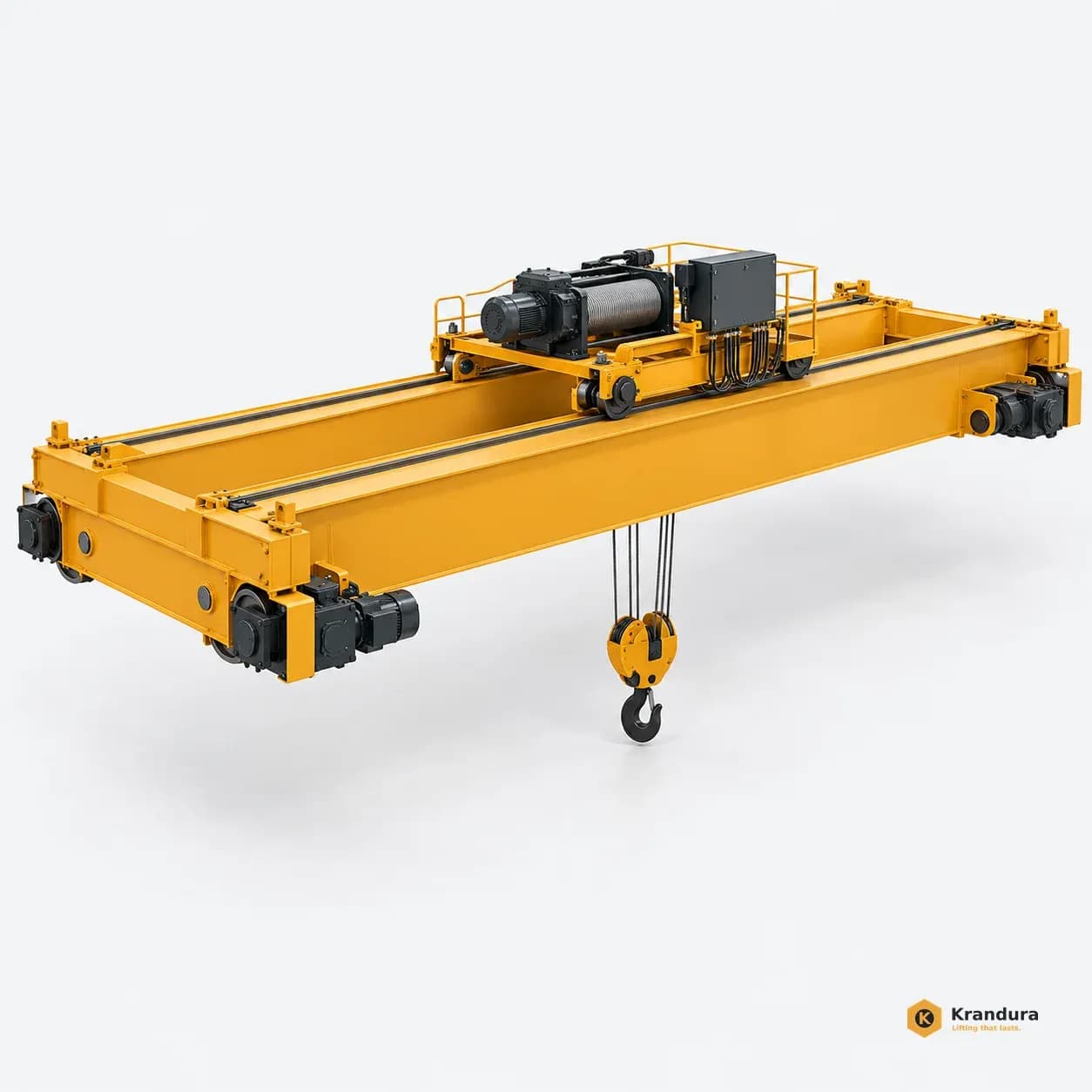
Single girder cranes are lighter, shallower and cheaper over moderate spans and light to medium duty. Double girder cranes put the hoist between or on top of two girders, which raises the hook higher for the same building height, stiffens the structure at large spans, and gives you somewhere to put a walkway, the panel and the trolley machinery. Below roughly 20 m span and light duty, the single girder usually wins on price. Above that — or when headroom is tight and lift height is large — the double girder is usually the right answer.
How the two designs differ
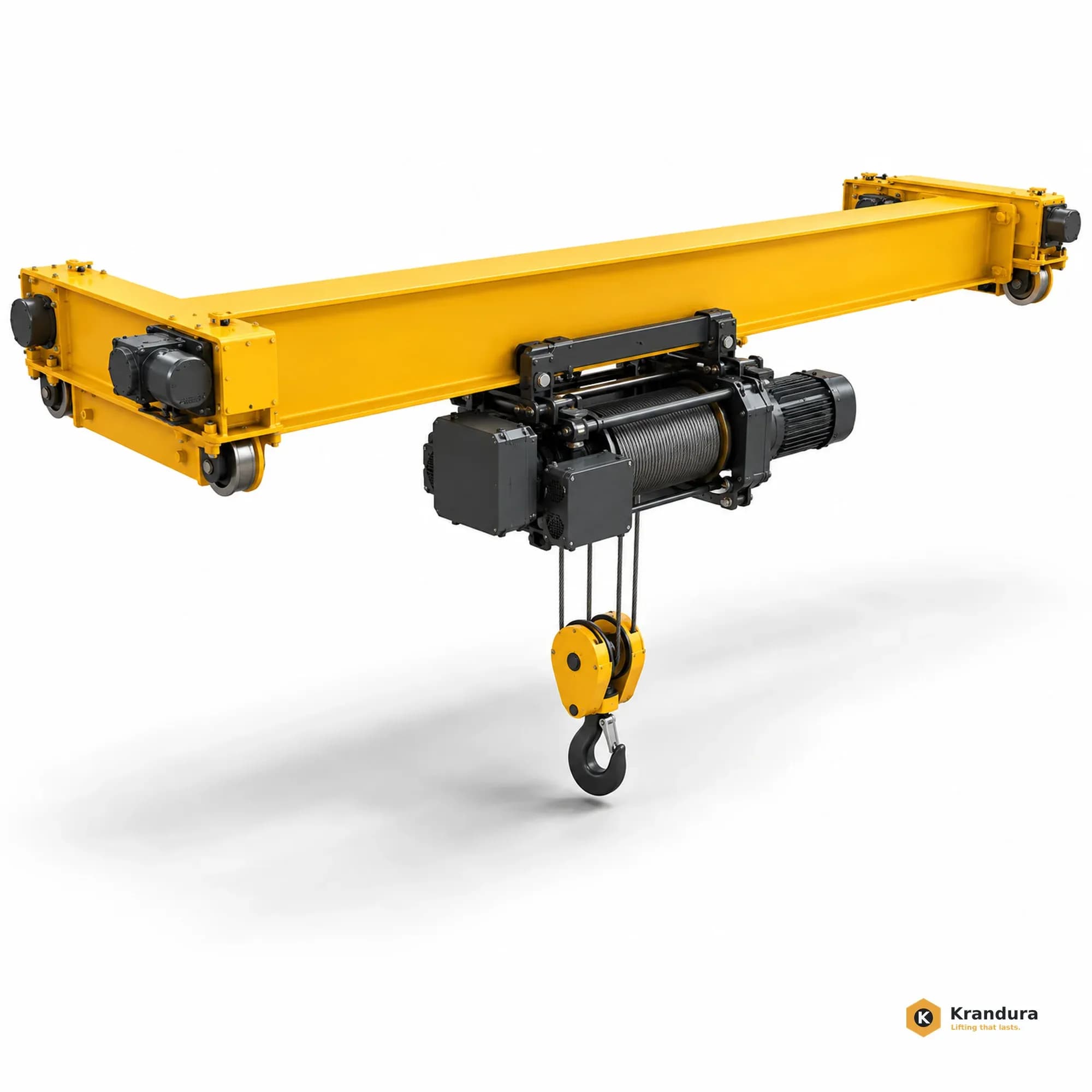
- Structure — a single girder carries the hoist under one main girder; a double girder carries the trolley between two girders, or on rails on top of them.
- Hook approach — on a single girder the hook block hangs below the girder, so the lowest hook position and the side approach are limited by the hoist envelope. A double girder with an underslung or top-running trolley can bring the hook closer to the girder and to the end carriage.
- Headroom — for the same lift height, a double girder often needs less building height, because the hoist does not hang below the girder.
- Weight and runway load — the single girder presents a lighter wheel load to the runway, which can matter when an existing building is being re-used.
- Access and maintenance — a double girder gives you a platform for the trolley, panel and rope drum. Servicing a single girder hoist is done from below or from a platform that has to be provided.
Decision rules that hold up in practice
- Span up to about 20 m, light to medium duty — a single girder crane is usually the economical choice, and the runway structure is lighter.
- Span beyond about 20–22 m — the girder depth needed for stiffness at large spans erodes the single girder advantage, and the double girder becomes competitive.
- Large lift height with limited building height — go double girder. The hook approach and headroom advantage is usually the deciding factor.
- Heavy duty or high cycles per hour — go double girder for the structure, the larger hoist envelope and the maintenance access.
- Existing building with limited runway capacity — check the wheel loads before choosing; sometimes the lighter single girder is what the building can actually carry.
- Need for a walkway, maintenance platform or a top-mounted panel — the double girder gives you the space.
These are starting rules, not a specification. Span, lift height and duty class interact, and the final choice should be confirmed against the actual duty profile and the runway capacity.
What to check before you decide
- Hook approach at both ends of the bay — how close to the end wall or column does the load need to travel?
- Lowest hook position — how deep does the load have to go below the rail level?
- Highest hook position — what clearance above the load, the rigging and the hook block do you need?
- Duty class — cycles per hour and load spectrum, not just the total tonnage moved per day.
- Existing structure — runway beam capacity, column loads and rail level, if the crane is going into a building that already exists.
- Control position — pendant, radio or cabin. Cabin cranes are almost always double girder.
- Future changes — a planned capacity increase later may justify a heavier class now.
Common mistakes
- Choosing on capacity alone. Span and duty class move the design more than capacity does.
- Assuming a double girder always lifts higher. It lifts higher for the same building height — the usable lift height still depends on the hook block, the load and the clearance you need.
- Ignoring hook approach until the layout is fixed, then finding the crane cannot reach the last bay.
- Specifying a light duty class for a process that runs two or three shifts.
- Forgetting that a heavier crane needs a heavier runway, which is part of the project cost.
What to send with your inquiry
Capacity, span, lift height, duty or cycles per hour, hook approach requirements at each end of the bay, available headroom, indoor or outdoor conditions and power supply. If you already have a building drawing with column spacing and rail level, send that as well — it resolves most of the ambiguity in one step.