
ELECTRIC HOISTS
Electric hoist: the lifting package and the beam it runs on
An electric hoist lifts and holds the load; the beam, the trolley and the runway decide where that load can go. Buyers usually start with the hoist and discover the beam later. Starting with both together avoids a hoist that fits the load and not the structure.
IN THIS FAMILY
Members of this family
Fixed, trolley or monorail, what sets the hoist specification, how the beam enters the decision, and the data to send.
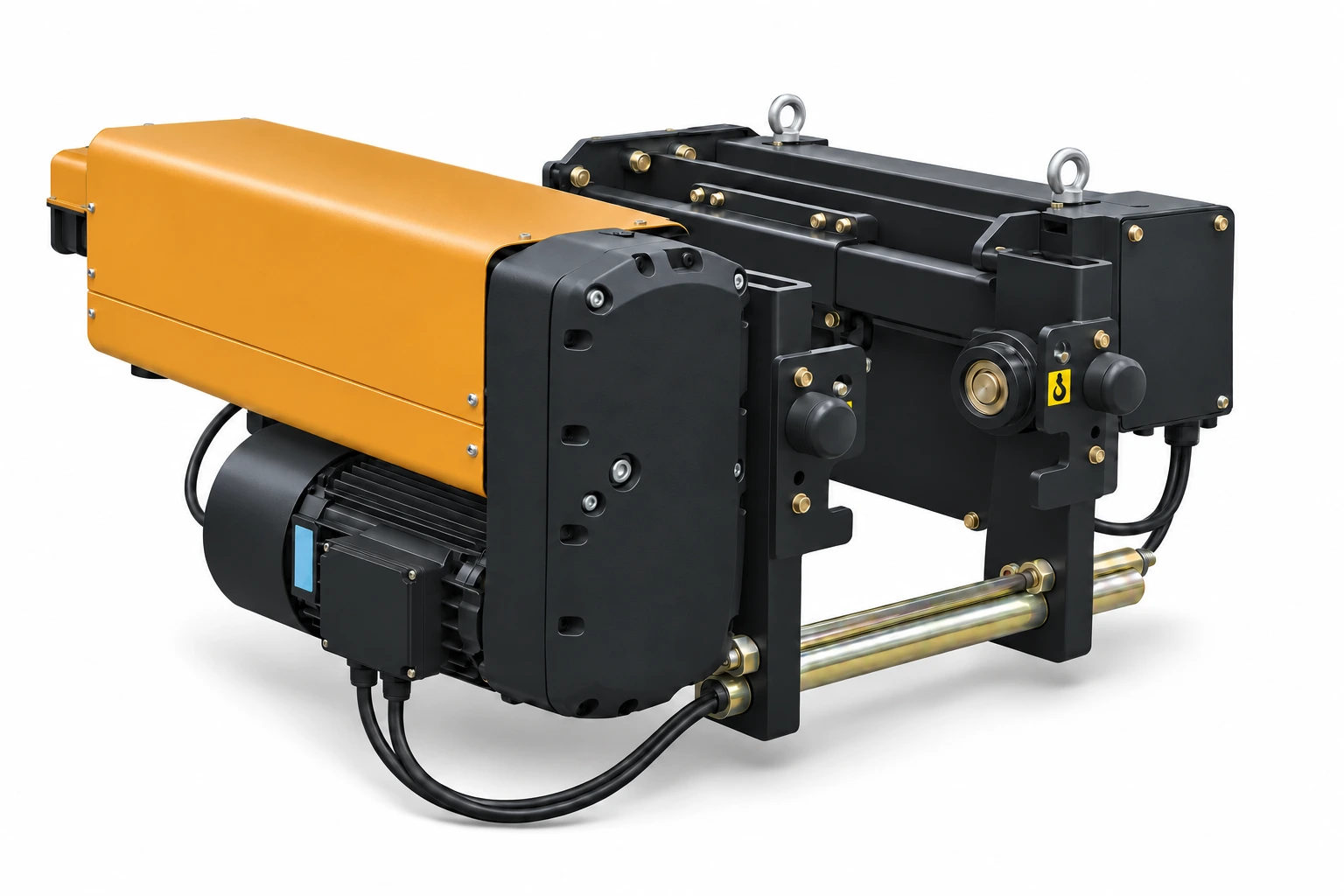
European-style electric wire-rope hoist
Discuss an electric wire-rope hoist and trolley package for your proposed supporting beam or crane.
View equipment →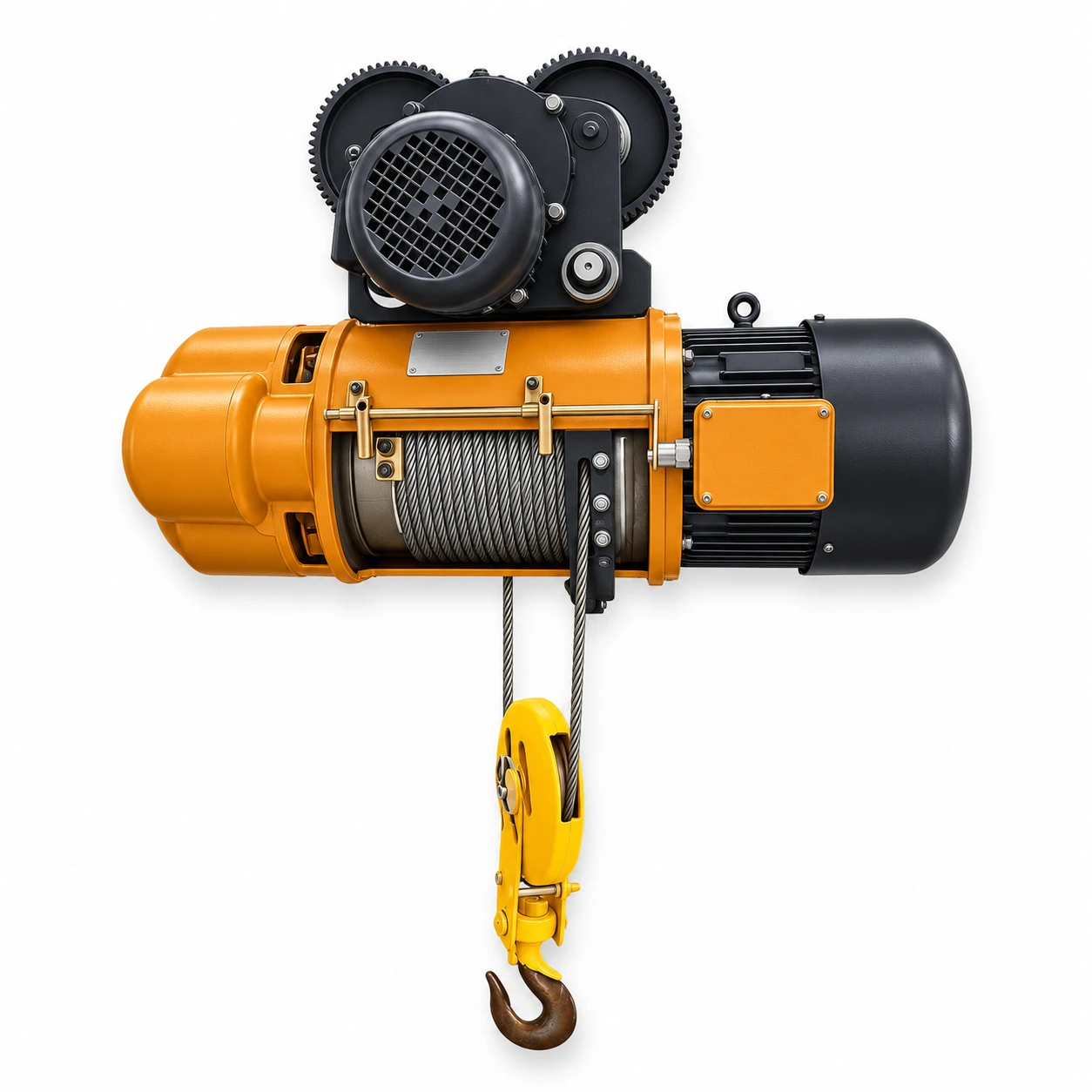
CD-type electric wire-rope hoist
Discuss a CD-type electric wire-rope hoist for vertical lifting with a compatible support and trolley arrangement.
View equipment →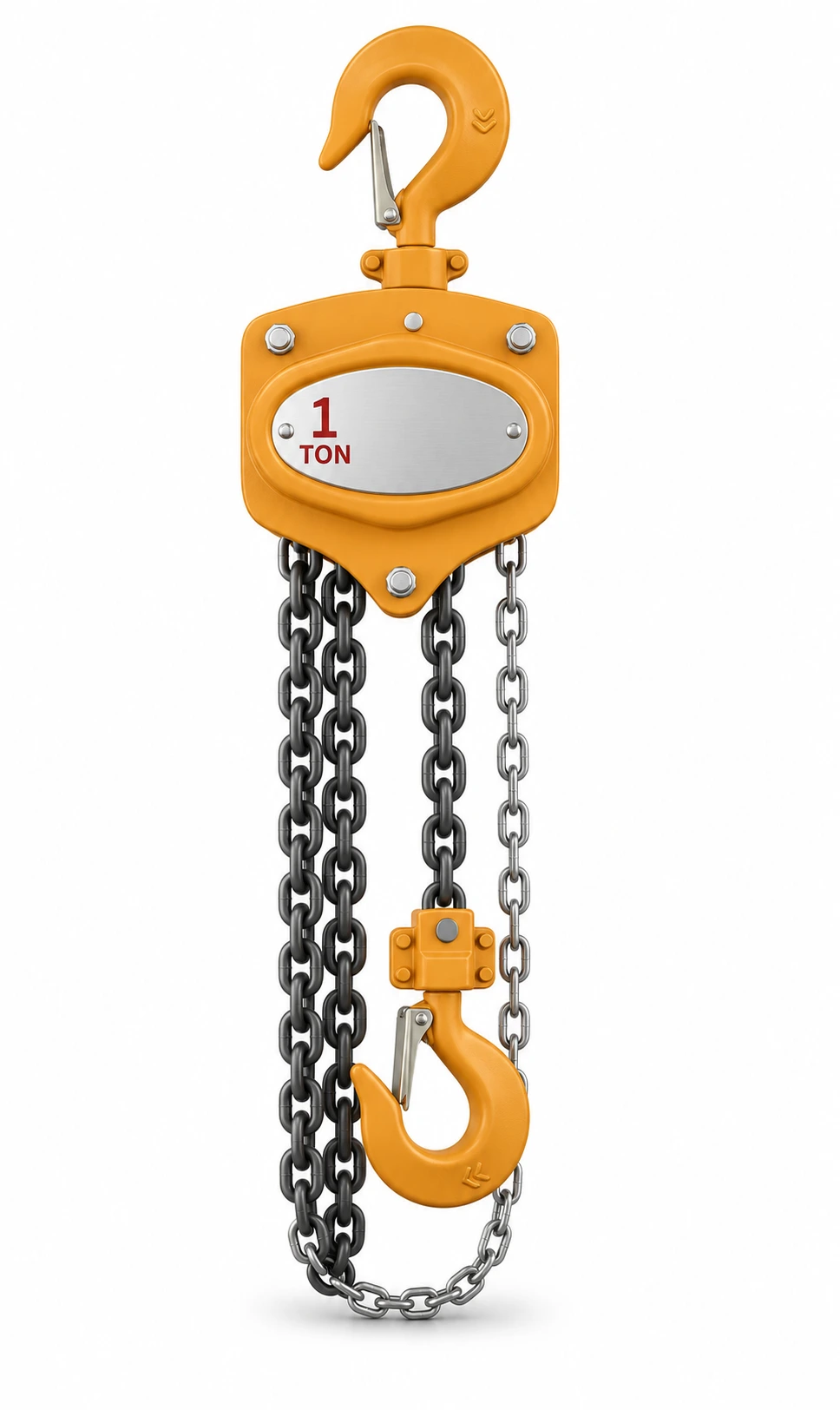
Manual chain block
Discuss a hand-operated chain block for a lifting task where you want to compare a manual arrangement.
View equipment →Three arrangements, three different jobs
The same hoist can be fixed in one place, hung from a trolley that runs along a beam, or run on a monorail that follows a route. The arrangement decides how much of the workplace the hoist can reach.
| Arrangement | What it gives you | What it needs |
|---|---|---|
| Fixed hoist | Lifting at one point, with no travel along a beam | A structure or beam above the lifting point that can carry the load and the hoist |
| Trolley hoist on a beam | Travel along one beam, in addition to lifting | A beam sized for the trolley wheel loads, with end stops and a clear travel length |
| Monorail or crane bridge | Travel along a route or across a bay | A designed runway or monorail, with curves, switches or a bridge structure |
The hoist body, the trolley and the beam interface are separate items in the quotation. A hoist quoted without the beam arrangement is only half the answer.
What sets the hoist specification
Six inputs decide the hoist. Four of them are usually known before anyone is asked for a quotation; two are usually missing.
- The load, including the attachment: a spreader, a magnet or a grab adds its own weight to every lift.
- The lifting height: from the hook at its lowest working position to the highest the load has to reach, plus the reeving and the hook block.
- The duty: lifts per hour, hours per shift and how much of the rated load is carried. This is what the mechanism class is calculated from.
- The control arrangement: pendant, radio or cab, and where the operator stands relative to the load.
- The power supply: voltage, frequency and phase at the site, and whether the supply reaches the hoist position.
- The environment: dust, moisture, heat, outdoor air, wash-down or a food area. It changes the enclosure, the finish and the inspection points.
Speed is a decision, not a specification to copy. A single speed is adequate for many workshop lifts; two speeds or a variable drive change the control, the scope and the way the load is positioned.
The beam is part of the hoist decision
A trolley hoist applies its load to a beam through wheels, and the beam has to carry that load over its span. That is why the beam dimensions belong in the hoist enquiry, not in a later conversation with a steel supplier.
- The beam type and its dimensions, measured rather than assumed.
- The span between supports, and whether the beam is simply supported or continuous.
- The clear travel length and what stops the trolley at each end.
- The headroom above the beam for the hoist body at its highest position.
- Whether the beam already carries something else, and what its condition is.
An existing beam is not automatically adequate because a similar hoist ran on it before. The wheel loads of the proposed hoist and trolley are what the beam has to carry.
What to send before a quotation
| Value | Why it changes the answer |
|---|---|
| Load and attachment weight | Sets the hoist rating, and the attachment is carried on every lift |
| Lifting height and headroom | Sets the reeving, the hook block and whether the hoist body fits |
| Lift and travel arrangement | Fixed, trolley or monorail: it decides whether a beam is part of the scope |
| Beam dimensions and span | Sets the trolley and the wheel loads the beam has to carry |
| Duty and cycle | Sets the mechanism class and the brake and motor selection |
| Power supply | Sets the motor, the control voltage and the cable arrangement |
| Control position | Pendant, radio or cab, and where the operator stands |
| Environment and destination | Sets the enclosure, finish, documentation and packing |
What the quotation should state
- The hoist model and its rated load, with the reeving and the hook configuration
- The lift, the hook approach and the headroom the hoist needs
- The trolley, the beam interface and the wheel loads applied to the beam
- The control arrangement, the supply requirement and the cable or festoon run
- The duty class of the mechanism, with the cycle it was calculated from
- The documents, the packing and what is excluded from the supply
The eleven values to measure before a hoist is quoted, and the eight items to compare between offers, are on the crane planning worksheet.
LET'S DISCUSS YOUR JOB
Choosing between hoist and beam arrangements?
Send the load, the lift height, the duty and the beam the hoist has to run on. Missing values become questions, not assumptions.
WhatsApp our team ↗Or email our team directly. If the form does not load, use email or WhatsApp.
COMMON QUESTIONS
Questions about electric hoists
Chain hoist or wire-rope hoist?
A chain hoist suits shorter lifts and slower, precise positioning, and it packs into less headroom. A wire-rope hoist suits longer lifts and heavier duty, and it needs more room above the hook block. The choice follows the lift height, the duty and the headroom, not the hoist alone.
Can I put a trolley hoist on a beam I already have?
Sometimes. The beam has to be measured, its span and condition checked, and the wheel loads of the proposed trolley compared with what it can carry. A beam that carried a similar hoist is not automatically adequate for a different one.
What decides the lifting height?
The highest position the load has to reach, plus the hook block and sling, plus the hoist body above the hook at its highest point. Measure to the working position, not to the roof, and check the headroom the hoist needs when the hook is fully raised.
Do I need two speeds?
It depends on what you are positioning. A single speed is adequate for many workshop lifts; two speeds or a variable drive help where the load has to be brought in slowly or set down precisely. It is a control decision, and it changes the quotation.